Power Girls - Fantastic Heroes
- 3.9
- Rating
- 10.00M
- Installs
- Free
- Price

 Analysis by App-foxy
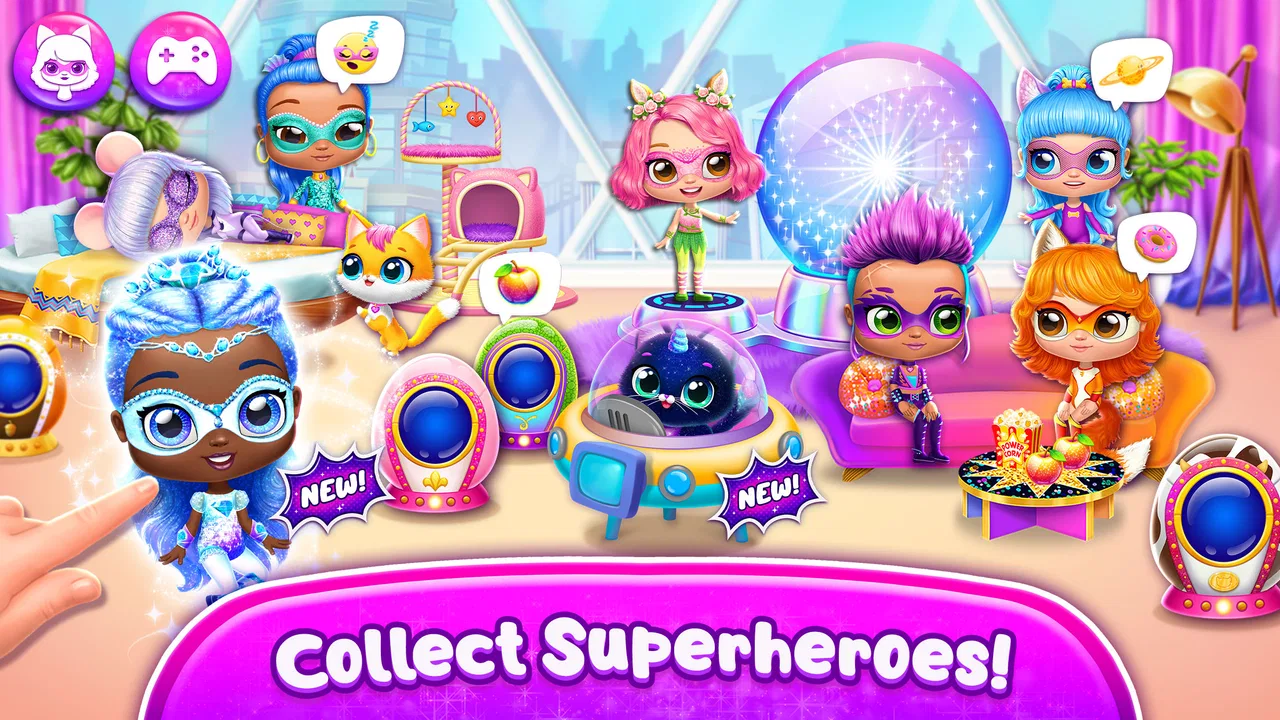
Power Girls - Fantastic Heroes is an educational game aimed at children who enjoy colorful characters, simple collecting goals, dress-up activities and short mini games. I found its strongest appeal in the way it turns a familiar superhero theme into a gentle play routine: children can build a team of cute heroes, change their appearance and spend a little time helping the city rather than facing a complicated combat system.
That makes it easy to imagine using during a quiet afternoon, on a family tablet, or during a short trip when a child wants something more interactive than a video. It is free to start, suitable for Everyone, and comes from TutoTOONS. The game has reached over ten million installs, so it is clearly aimed at a broad family audience rather than a small specialist group.
My overall impression is positive but specific. This is best treated as a light, child-friendly activity game, not as a deep educational course or a demanding superhero adventure. Its accessibility is also more about approachable presentation and flexible pacing than about specialist accessibility tools. Children who respond well to bright visual feedback and touch-based play will probably settle in quickly, while children who need strong text support, very quiet presentation or highly adjustable controls may find some friction.
You May Also Like

 Blood Strike: 2.5 Anniversary
Blood Strike’s Loadouts Turn Every Drop Into a Tactical Gamble
A close look at Blood Strike’s custom loadouts: how fast access to signature weapons reshapes its battle royale rhythm, rewards preparation, and narrows the gap between fights.

 Pandora - Music & Podcasts
Pandora’s Music Is Easy to Start, but Harder to Recover
Pandora’s strength is its low-effort path from a seed to a station. Its weak spot is how much confidence it asks you to place in connection, setup, and quiet recovery.

 8 Ball Pool
 Is Built on Rivalries, Rematches, and Routine
A close look at the rivalries, rematches, shared routines, and unanswered safety questions that turn a quick pool match into a persistent mobile community.

 Samsung Music
’s Quiet Strength Is Playing What You Already Own
Its reach comes less from spectacle than from dependable access to a personal library. That simplicity is both the app’s strongest retention engine and its ceiling.

 AccuWeather: Weather Radar
AccuWeather Review: A Quick, Clear Forecast for Everyday Decisions
For everyday plans, the best forecast is the one you can understand quickly. AccuWeather makes rain timing, radar, and local conditions easy to act on, with a few trade-offs.

 Hill Climb Racing
Why Hill Climb Racing Still Turns Crashes Into One More Run
A tiny car, a bumpy hill and one more upgrade: Hill Climb Racing keeps resurfacing because its simple chaos makes every near-miss feel personal.
More From Our News Desk
View All News


How the game feels to navigate and understand
I look at this section as a practical tour of what a child needs to recognize before play feels independent: the visual cues, the route between activities and the moments when an adult’s quick demonstration can prevent frustration. I’ll also consider why a screen that looks simple may still demand careful attention, which leads into how those demands change when the game is used around other people or away from home.
A visual route into the main activities
The game’s concept is easy to grasp without a long explanation. The child is invited to collect superhero girls, customize them, play small activities and take part in saving the city. That clear loop matters for younger players because they do not need to understand a large map, a complicated inventory or a long story before they can begin.
In my experience, the superhero framing gives each activity a reason to exist. Dressing a character is not just a separate wardrobe screen; it fits the fantasy of preparing a hero. Mini games feel like short missions rather than unrelated puzzles. That connection can help a child remember where to go next, especially when they are still learning how different screens in a mobile game work.
Bright characters and recognizable objects do much of the communication. This is useful for children who are not confident readers yet, because an image of a hero or an outfit can be more immediately understandable than a text-heavy menu. It also makes the game inviting when an adult is introducing it for the first time.
Where readability may depend on the child
Visual clarity is not the same as universal readability. A screen can be colorful and attractive while still asking a child to distinguish several small icons, notice a change in a character or understand which item is interactive. Younger players may need an adult nearby during the first session, particularly if they cannot yet read short instructions independently.
I would not choose this as a first independent game for a child who becomes frustrated when an icon is unfamiliar. A quick demonstration helps: show which areas open the heroes, where dress-up choices appear and how to return to the previous activity. Once that path is understood, the repeated structure should feel less intimidating than a game that constantly introduces new controls.
The age rating of Everyone makes it suitable for a wide family audience, but that label does not mean every child will find every screen equally easy. Reading ability, visual attention and familiarity with touchscreens still make a difference. In a shared setting, an older sibling can often explain the basic route without taking over the play.
A useful routine for parents and carers
I suggest beginning with a short guided session rather than handing over the device and walking away. Ask the child to identify a hero, choose an outfit and locate a mini game. This turns navigation into a small discovery exercise and reveals whether the child can follow the visual cues without help.
There is also a practical benefit to the game’s short-activity format. If a child has limited attention, an adult can agree on one small goal, such as customizing one character or completing one activity, instead of presenting the entire game as an open-ended task. That approach reduces the chance that the child will jump between screens and lose track of what they were doing.
Touch controls and different motor abilities
Touchscreen play can be approachable because it removes the need for a physical controller with several buttons. A child can interact directly with characters and objects by tapping or dragging on the device. For children who find traditional gamepads confusing, that direct relationship between hand movement and screen response may be a genuine advantage.
At the same time, touch interaction is not automatically easy for every player. A child with limited fine-motor control, tremors or difficulty holding a device steadily may struggle with small targets, repeated taps or actions that require accurate timing. I would test the game on the device the child will actually use, since screen size and grip can change the experience substantially.
A tablet placed flat on a stable surface may be more comfortable than a phone held in one hand. It can also give a child more room to see the characters and touch the intended object. For a child who tires quickly, short sessions with breaks are more realistic than expecting continuous play until every activity is finished.
Managing visual stimulation and sound
The cute superhero style is built around strong colors and animated presentation, which will be a major attraction for many children. For players who enjoy visual energy, it helps the game feel lively even when the individual activity is simple. The characters are easy to recognize as the central focus, and the theme gives the collection process a playful identity.
That same energy may be tiring for children who are sensitive to busy screens, movement or repeated sound effects. I would introduce it in a calm environment and watch the child rather than assuming that enthusiasm means comfort. If the child starts looking away, tapping randomly or becoming irritable, a pause may be more useful than encouraging them to continue.
Headphones can make a shared room easier for other people, but they are not always the best choice for a child who needs to remain aware of nearby conversation. Keeping the device at a moderate volume and playing in a well-lit room is a simple way to reduce unnecessary strain. These are ordinary adjustments, yet they can make the difference between a pleasant ten-minute activity and an overwhelming one.
Why the mini games matter for inclusive play
The mini games are important because they break up the collecting and dress-up elements. A child who is not especially interested in changing costumes may still enjoy a brief challenge, while a child who dislikes pressure can spend more time with the creative side. That variety gives families a little room to match the activity to the child’s mood.
However, variety can also create uneven accessibility. One activity may feel comfortable while another may require faster reactions or more precise touches. I recommend observing which parts the child chooses naturally instead of insisting that every mini game must be completed. The game works better as a menu of small experiences than as a test that the child has to pass in a fixed order.
A realistic example would be a child waiting in a doctor’s office with a parent. The parent could allow a short dress-up session first, then offer one mini game if the child still wants to play. If the screen becomes too stimulating or the controls prove awkward, the activity can end without losing the whole value of the visit. That flexibility is more useful than a game that demands a long uninterrupted campaign.
Using it in different situations and family settings
Here I focus on the everyday setting around the game, not just the child holding the device: waiting rooms, shared tablets, siblings taking turns and adults keeping purchases under control. Those situations can change whether a short play session feels convenient or stressful, so it helps to match the activity and the level of supervision to the family’s routine.
Short sessions, travel and shared devices
This game fits short bursts better than long, serious play. Its theme is easy to explain, and the activities can provide a change of pace during travel, a waiting period or a quiet break at home. I would still set expectations clearly: it is entertainment with educational positioning, not a replacement for reading practice, structured lessons or hands-on play.
On a shared family device, the child may need help switching from another person’s profile or activity, depending on how the device itself is organized. An adult should also check the screen before handing it over, especially when the child is old enough to explore menus independently. That is less about the superhero theme and more about making sure the device is being used in a controlled family context.
The game is free, which lowers the barrier to trying it. It does include in-app purchases ranging from $1.49 to $159.99 per item, so I would not leave purchasing decisions to chance. Families should use the device’s purchase controls and agree in advance whether the child may request an item or play only with the free content. The large gap between the smallest and largest listed item makes that conversation particularly important.
When an adult should stay close
Supervision is most useful at the beginning, during purchases and whenever a child has difficulty interpreting the screen. A parent does not need to narrate every tap, but a few calm prompts can teach the child how to move between collecting, customization and mini games. After that, the adult can step back and see whether the child can continue without repeated assistance.
I also like the idea of using the game as a shared conversation starter. Instead of simply asking whether the child won, ask why a particular hero needs a certain outfit or what kind of help the city needs. That turns the superhero setting into imaginative play and gives the child a chance to explain choices, rather than reducing the session to tapping for rewards.
For children who share a device with siblings, taking turns may require more planning than the game itself. One child may want to customize while another wants to play mini games. Setting a timer or assigning one activity per turn can prevent arguments. This is a small household detail, but it is often more important to the real experience than the game’s visual design.
How it compares with common alternatives
Compared with a traditional educational app built around spelling, arithmetic or reading drills, this title is more open-ended and character-led. It may be better for a child who resists worksheets but enjoys stories, costumes and pretend rescue missions. It is less suitable when a parent needs clearly sequenced academic practice with measurable lesson progress.
Compared with a conventional action game, it is a gentler choice because the appeal comes from collecting, dressing characters and completing small activities rather than mastering complex combat controls. That can make it a better fit for a first gaming experience. A child looking for fast competition, advanced strategy or a large adventure world will probably outgrow its format quickly.
Compared with a pure dress-up app, the superhero mission theme gives the play more direction. The child is not only arranging clothes; there is a wider fantasy of building a team and helping the city. The trade-off is that a child who wants unrestricted creative styling may prefer an app focused almost entirely on design and decoration.
Technical expectations and version context
The game supports devices running Android 6.0 or later, and the current version is 1.6.182. That makes it relevant for families using older compatible Android hardware, although practical performance can still vary with the particular phone or tablet. Before planning a long trip around it, I would install and test it at home on the intended device.
The title was released on April 25, 2022, and its continuing availability suggests that it remains part of TutoTOONS’ family game lineup. I would keep the app updated through the normal device store when possible, especially if a child relies on it regularly. Updates can affect how familiar menus feel, so an adult may want to check the game after an update before giving the device back.
Barriers that still deserve attention
The biggest limitation for inclusive use is that a cheerful, touch-first design cannot solve every access need. Children who require large text, strong contrast, reduced animation, alternative input methods or detailed spoken guidance may need a different game or additional device-level support. I would avoid promising independent access until the child has tried the actual activities.
Another barrier is the possibility of accidental spending. Even when a child understands the game perfectly, purchase prompts can interrupt the experience or create pressure to obtain more characters and items. Families who want a completely purchase-free routine may prefer an app with no in-app buying, while families comfortable with optional spending should still use safeguards.
The educational label also needs a realistic interpretation. I see learning value in decision-making, visual matching, imaginative storytelling and following simple activity rules, but the game should not be treated as a substitute for a dedicated learning program. If the goal is a specific school skill, a focused educational app will usually offer clearer progression and more direct practice.
Children who dislike repetition may also lose interest once the novelty of collecting and dressing characters fades. That is not a flaw for a short-session game, but it matters if a parent expects one app to provide weeks of varied entertainment. I would treat it as one option in a child’s activity mix rather than the only game on the device.
Who I would recommend it to
I would recommend Power Girls - Fantastic Heroes to families looking for a friendly first game with a strong visual theme and several gentle ways to play. It is especially promising for children who like superheroes but are not ready for complicated controls, and for children who enjoy choosing outfits as much as completing challenges.
I would be more cautious for a child who needs extensive accessibility customization, becomes distressed by colorful motion or sound, or expects substantial academic instruction. In those situations, a quieter app with adjustable presentation or a subject-focused learning tool may be a better choice. The fact that the content rating is Everyone is reassuring for general suitability, but it should not replace observing the individual child.
My inclusive verdict
After looking at the game as both a play experience and a family accessibility choice, I think its inclusive strength is its low conceptual barrier. The superhero story is immediately understandable, the activities are varied enough to support different interests, and touch interaction can feel more approachable than a controller. Children can participate through collecting, styling or mini games rather than needing to enjoy one single type of challenge.
Its weaker side is the lack of certainty that every child will be able to adjust the presentation or controls to personal needs. Parents should test the smallest interactions, watch for sensory overload and manage purchases before independent play. Those steps are not difficult, but they are essential if the game is being introduced to a child with motor, visual, attention or sensory differences.
With an average rating of 3.9 from around nineteen thousand ratings and more than four hundred written reviews, the reception looks mixed enough to encourage realistic expectations rather than blind enthusiasm. I read that as a sign to approach it for what it is: a colorful, free-to-start educational game from TutoTOONS that offers light superhero play, not a complete learning system.
My recommendation is to try it with a short, supervised session first. If the child can recognize the main choices, enjoy at least one activity and remain comfortable with the visual and touch demands, it can become a pleasant occasional game. If those basics cause frustration, choosing a simpler or more adjustable alternative will be kinder than trying to force a poor fit.
For the right child, the best feature is the freedom to move between imagination and small tasks without needing a long commitment. That makes it easy to share, pause and revisit. I would keep it as a supervised option in a broader collection of games and learning activities, with the device’s purchase protections enabled and the child’s individual comfort guiding how often it is used.
FAQs for Power Girls - Fantastic Heroes
01What is the main objective of Power Girls - Fantastic Heroes?
Power Girls - Fantastic Heroes is a vibrant role-playing game where players take on the roles of superhero girls with unique powers. Your objective is to complete various missions, save the city from villains, and rescue citizens in distress, all while upgrading your characters' abilities to become more powerful heroes.
02Is Power Girls - Fantastic Heroes suitable for all age groups?
Yes, Power Girls - Fantastic Heroes is designed to be family-friendly and suitable for players of all ages. Its colorful graphics, simple controls, and engaging storylines make it particularly appealing to younger audiences, while still offering enough depth and challenge for older players.
03What are the key features of Power Girls - Fantastic Heroes?
Key features include a wide variety of missions, customizable characters with unique abilities, and an expansive city to explore. Players can upgrade their heroes, unlock new powers, and encounter different villains. The game also offers daily challenges and events to keep players engaged and entertained.
04Does Power Girls - Fantastic Heroes require an internet connection to play?
No, Power Girls - Fantastic Heroes does not require a constant internet connection, making it ideal for playing on the go. However, certain features, such as in-game purchases and social interactions, may need access to the internet for the best experience.
05Are there any in-app purchases in Power Girls - Fantastic Heroes?
Yes, the game offers various in-app purchases that enhance gameplay, such as character upgrades, special abilities, and cosmetic items. While these purchases can enhance your experience, they are not necessary to complete the game, ensuring that all players can enjoy the core content without spending money.
Pros
- Engaging and colorful graphics.
- Variety of fun mini-games.
- Easy-to-learn controls.
- Encourages creativity in kids.
- Frequent updates with new content.
Cons
- In-app purchases can be pricey.
- Ads may interrupt gameplay.
- Limited offline functionality.
- Some levels are repetitive.
- Can drain battery quickly.

Power Girls - Fantastic Heroes
Gallery